Foods For Glowing Skin
Apr 16, 2026
Make your skin glow with the following light-enriched foods. That's right! Sunlight puts light into food and that light, when consumed, radiates through your skin!! If it's green, you'll glow!
Eating these is the same as ingesting life-promoting light:
- Sprouts (nice and green ones) including wheatgrass
- Dark, leafy greens
- Green algae: chlorella
- Blue green algae: spirulina and aphanizomenon flos aqua (AFA)
- Seaweeds
- Ceremonial grade match green tea
- Other green teas
“Chlorophyll is a green pigment found in all plants, algae and cyanobacteria (blue-green algae). Vital for photosynthesis, chlorophyll allows plants to obtain energy from light by converting the suns rays into chemical energy. Since all life on earth with the exception of some bacteria is supported by the sun, photosynthesis is a fundamental and essential process.” Posted by Hippocrates Institute, Read More
A More Complete List of Chorophyll-Rich Foods:
- Green and Blue-Green Algae
- Cereal Grasses (wheat, oats, barley, etc.)
- Buckwheat
- Sea Vegetables
- Green Leafy Sprouts
- Spinach
- Asparagus
- Green Bell Peppers
- Broccoli
- Brussels Sprouts
- Green Cabbage
- Celery
- Collard Greens
- Green Beans
- Green Peas
- Kale
- Leeks
- Green Olives
- Parsley
- Romaine Lettuce
- Sea Vegetables
- Swiss Chard
- Turnip Greens
And did you know that you can regrow food form kitchen scraps? Here's what Ecotonix has to say about it.
As tiny sprouts of our springtime flowers emerge for another chance at life, we were reminded to look at our kitchen scraps with the same attitude of renewal. Many fruit and vegetable scraps that are deemed inedible or compost-worthy can be directly re-grown into food that is edible, tasty, and nutritious. And the cycle of growing new food from scraps can be repeated over and over again allowing you to produce an unending supply of fruits and vegetables from food scraps that you ordinarily might have composted or thrown away.
What are the Benefits of Re-Growing Fruit and Vegetable Scraps?
There are dozens of reasons why re-growing food scraps is beneficial to both you and the environment. For example, regenerating fruit and vegetable scraps means less landfill waste, it supplements your food budget, and it also allows you to grow organic food that you know is healthy and nutritious. Additionally, spawning nourishing food from scraps is one of the most environmentally friendly methods of recycling and an excellent teaching activity to share with your kids.
You can even recycle Kitchen Scraps Elegantly! Let your creativity run wild with sustainable recycling that begins in the kitchen. Next, check out this incredibly fun Pinterest board on all kinds of fun and novel ways to recycle things you might otherwise throw away!
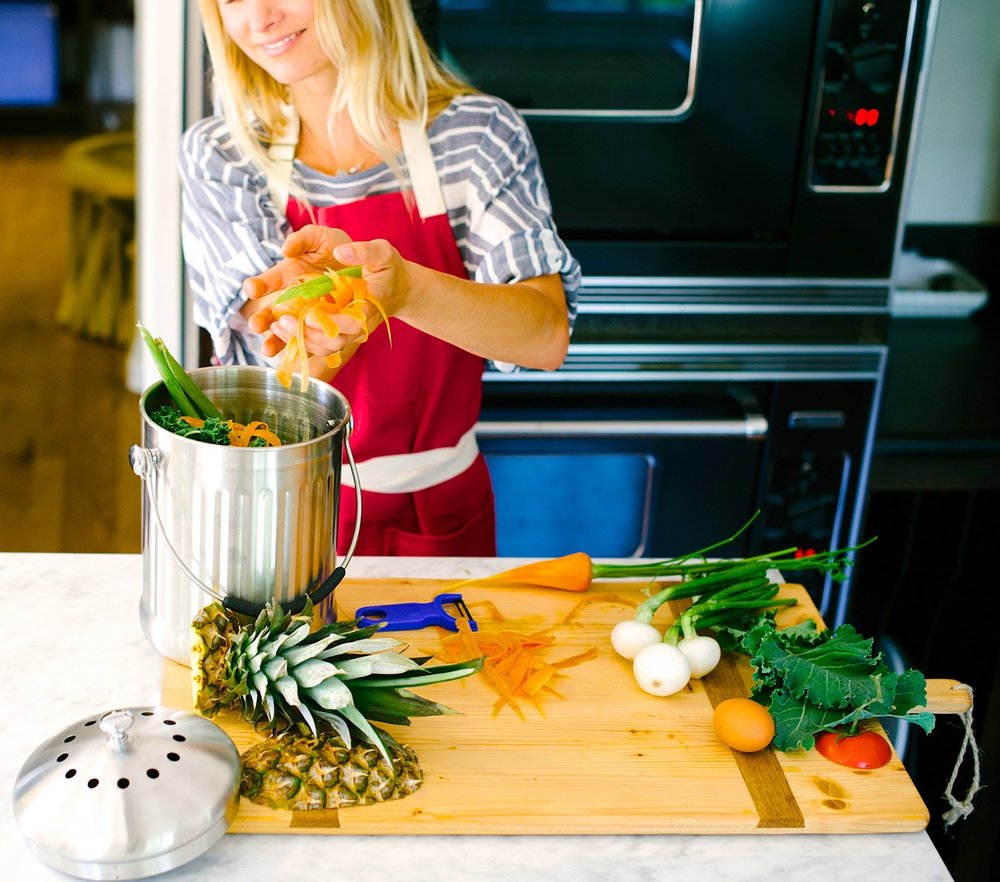
- Rather than filling your trash can with vegetable waste, put it in a ceramic or stainless steel compost bin with filter (pictured above). Your garden will love the fresh nutrients that would have otherwise ended up as landfill. These attractive composting bins look good enough to be an indoor kitchen accessory.
- Check out the Food Cycler Indoor Kitchen Composter by Food Cycle Science. We haven’t tried this one but the reviews are generally quite good. They advertise it as easy to use, odorless and environmentally friendly reducing kitchen waste as much as 90% of its original volume. You end with a viable soil amendment in around three hours. It’s a little pricey but could be worth the investment especially if you are all about “green living.”
- Space saving, triple stacking recycle bins are often color-coded in blue, green and yellow for easy sorting. Some have swing-back lids that stay open as long as you want and securely snap on to the bin when you close them. The bins can also be used for storage, indoors or out. They tend to be made of recycled materials themselves and resist moisture, rust and rot.
- Rubbermaid makes a large, inexpensive under counter “Hidden Recycler” made from polypropylene collecting recyclables out of sight. The bag itself is made from recycled material, is durable and machine washable. It has a large capacity and with a handle, you can grab and take to your supermarket recycling bins.
- And drumroll…. the least expensive option of all… Make just the right amount of food so there are no leftovers. Carefully plan portion sizes for no waste!
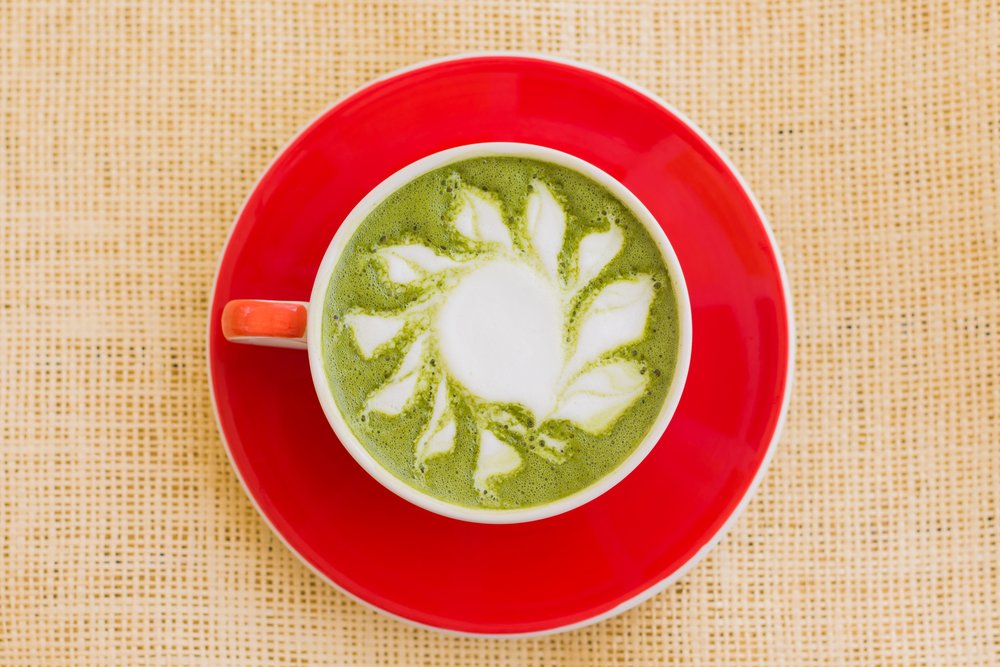
How to Make Matcha Green Tea Latte
First, make your own almond milk from raw imported (not U.S.) almonds by blending one cup of drained and rinsed almonds that have previously been soaked in pure water at least four hours along with two cups of chilled pure water. Run in a high speed blender about 45 seconds. Next, pour through a nut bag to filter out the almond pulp.
Place 3/4 cup of your fresh-made almond milk (or store bought) into a heatproof mug. Add one teaspoon of ceremonial grade matcha green tea. Next pour just-to-boiling water, about 1/4 cup and WHISK briskly together. Add some raw blue agave to sweeten and to taste.
Note: Ceremonial grade matcha green tea is worth what you pay for it. (The lesser grades are used for cooking.) “Many studies have determined that matcha has 60 percent Epigallocatechin gallate [EGCG]. EGCG is tea’s most abundant antioxidant catechin; it is one hundred times more potent than vitamin C, twenty-five times more potent than vitamin E, and may have therapeutic applications in the treatment of many disorders since it aids in the destruction of free radicals.” The Healthy Matcha Cookbook
Matcha is just about the most potent agent against cancer, viruses (studies are now showing even HIV), hepatitis B and C, and bacteria.